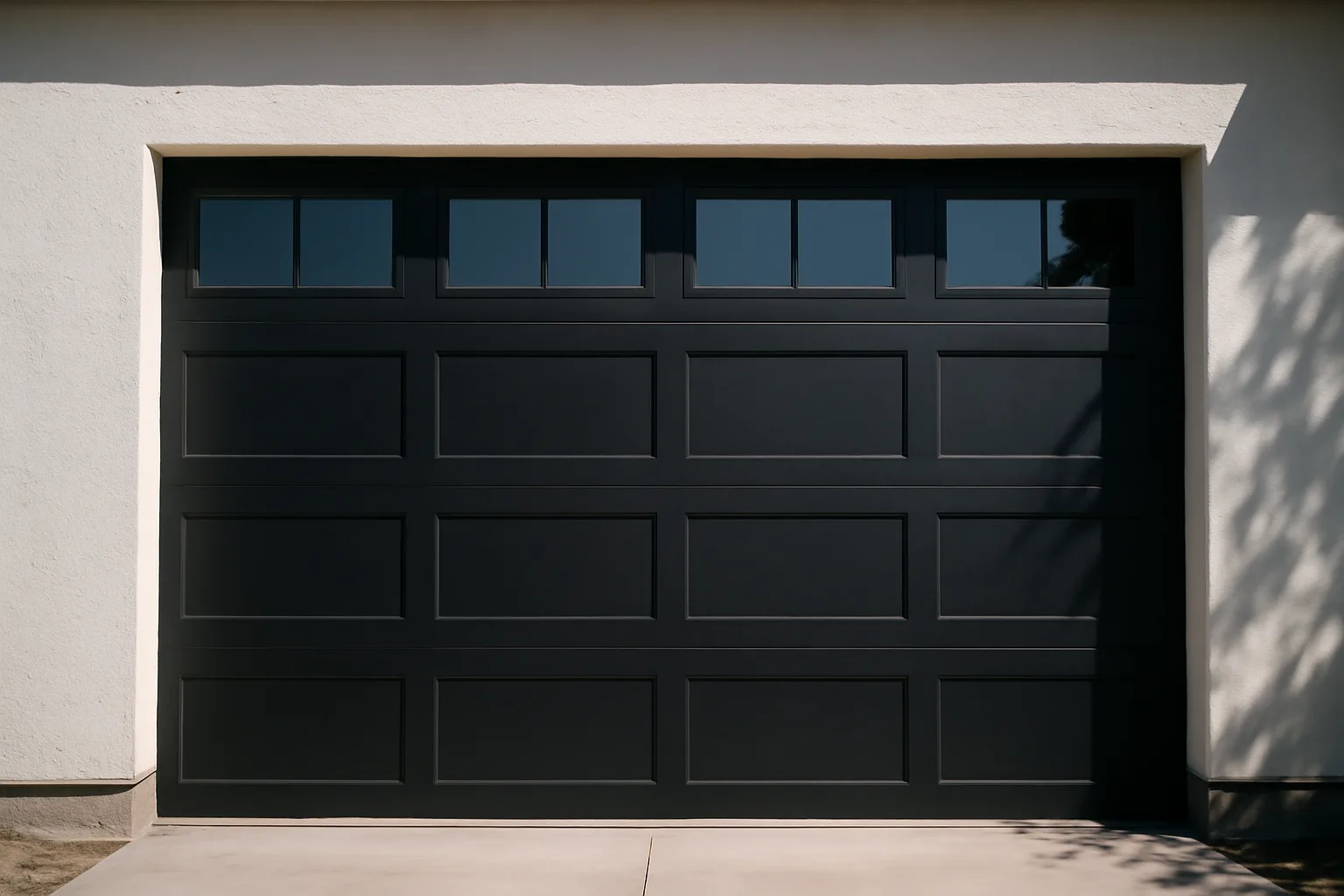
Why is my garage door off its rollers?
A roller can leave its track after a direct impact, damaged guiding hardware or an uneven cable lift twists the door. The visible roller may be a consequence of an earlier support fault, so keep the assembly unused and have that cause assessed before a reset is treated as complete.
A garage door off its rollers has lost a relationship between support and guiding. The rails are meant to guide the sections, while springs and cables assist their weight. If an uneven lift twists the panels, the rollers can be forced out of the intended route. A direct impact can also damage that route. For Northbridge service, keep the controls unused and describe the door's present position before trying to name the whole repair.
Identify the first change you noticed
Mention any vehicle contact, stored object close to a rail or scrape that appeared before the door stopped. Say whether one side started lagging during the last cycle. The sequence helps frame the assessment without requiring another dangerous attempt. A roller now outside its rail is clear evidence of displacement, but not proof that the roller was the first component to fail.
A cable no longer carrying support evenly can affect the panels and guiding hardware afterward. A rail damaged directly may obstruct a supported door. The inspection needs to distinguish those conditions and identify what remains suitable for use. Returning a visible part to position does not establish that the earlier cause has been corrected.
Keep the opening clear
Do not move beneath raised or tilted panels to collect tools or reach a latch. Improvised supports do not make an uneven load appropriate to work under. Removing the operator connection likewise does not restore balance; an unsupported door may move after release. Describe safe alternative access if it exists.
Leave bottom brackets, cable fittings and spring connections untouched. A stationary assembly can retain force, and a cable that looks loose is not proof of a safe adjustment point. Do not pull it toward a drum or command the motor to raise the hanging side. Prevent unintended control use while service is being arranged.
Understand what the reset proposal includes
A written estimate should identify the cause and any related damaged rail, roller or lifting part. More than one correction may be needed, but each should have an explained purpose. Ask what restores the support and what restores the guiding path. That is more useful than accepting a broad alignment description without understanding the work.
The cable-and-track categories on this site distinguish repositioning from damaged-part correction. Use the matching description with the free written estimate for the inspected assembly. A small reset range does not establish that every affected part remains serviceable. If work only secures the opening initially, ask which further correction and operating restriction remain.
Review the complete movement afterward
Ask how the uneven pull or obstruction was addressed and what checks covered opening and closing. Relevant operator functions need to suit the physical repair rather than conceal resistance with extra force. A brief successful lift near the floor does not show the entire path where the fault may have developed.
Keep the work scope and equipment information. Call (774) 332-7642 if your Northbridge door later develops another lag, scrape or changing gap. Report where it happens and when it began, keeping abnormal use stopped. Those details support a new assessment without forcing the assembly back into line or disturbing loaded hardware before the cause can be examined. Mention any attempt to move or adjust the door after its first failure. That history helps separate the original displacement from changes introduced later without asking you to undo an unsafe intervention.
Our garage door cable & track repair page covers how this is handled on a visit.
Outside source: the CPSC's garage door safety notes.